

Reconciliation
Action
Plan
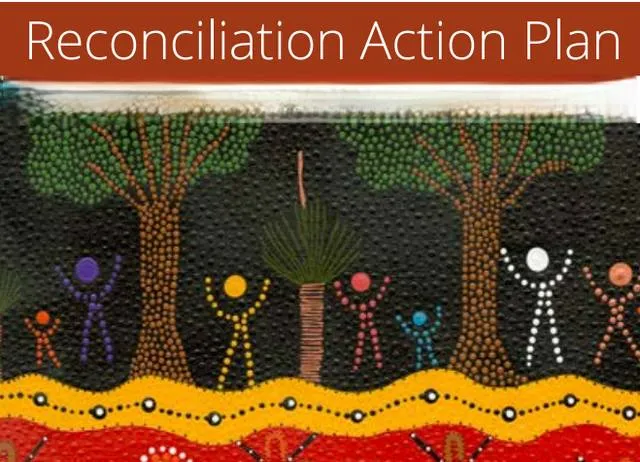
What is the RAP and How Does It Affect Kwinana Residents?
Many residents are unaware that the City of Kwinana is implementing a Reconciliation Action Plan (RAP).
This initiative serves as a roadmap directing how council funds and policies are allocated specifically toward the local Aboriginal community—who represent roughly 4.4% of Kwinana’s population.
While the concept of reconciliation is widely supported, concerns are growing over how the Council is executing it—particularly given that over 95% of ratepayers are funding programs tailored to less than 5% of the community.
Who’s Really in Charge?
- The Council & CEO:
They have moved RAP-related spending into “operational matters,” hiding costs from the public budget—making it difficult for residents to see the true expenses. - Consultants:
Instead of using local staff, the City often pays outside consultants thousands of dollars for reports and strategies related to the RAP. - Small Committee:
The Boola Maara Aboriginal Consultative Committee now has significant influence over land decisions and City policies—sometimes with more say than long-term residents.
The “Cover-Up” and Spin
The Council is cautious about discussing these issues openly.
Here’s what residents should know:
- Hidden Costs:
Expenses are buried within categories like “Community Development” or “Art and Culture,” which cost over $2.5 million annually. There’s no line item labeled “RAP,” and responses to questions about costs are vague. - Symbolic Gestures vs. Real Benefits:
Much money is spent on ceremonies, plaques, and consultants, while essential projects like service upgrades and community infrastructure like the “Kwinana Loop Trial” are dismissed as “not enough in the budget.” - The “Moral Shield”:
When residents question rate hikes or spending, the Council often frames the RAP as “essential social progress,” implying critics oppose community development.
Why Are the Majority Paying for a Minority?
Kwinana is diverse, but a small 4.4% indigenous minority is given disproportionate power and funding.The Council avoids full disclosure of costs, knowing that if residents saw detailed expenses—like consultants’ fees—they would be outraged.
A Question of Necessity
It’s worth noting that the RAP may have been necessary decades ago when Indigenous Australians were disadvantaged by the effects of colonisation and systemic inequality.
Back then, efforts to acknowledge and support Aboriginal communities were critical for addressing historical disadvantages.
But times have changed.
Today, many Aboriginal children attend the same schools, TAFE colleges, and universities as everyone else— tuition and textbooks are paid by government unlike other students.The argument that ongoing special support is needed because of past disadvantages begins to run hollow when the community’s young people now have access to the same education and opportunities.
Moreover, Kwinana City’s own Mayor, a proud Aboriginal Whadjuk Noongar man, has achieved a status and level of success that many in the community may never reach, regardless of programs or policies.
His rise to Deputy Mayor proves that individual achievement is entirely possible in Kwinana today.
This success challenges the need for broad, group-based DAP initiatives, suggesting they may do more to create division and entitlement than genuine progress.
What Is the Goal?
Reconciliation initiatives should be held to the exact same standards as any other major Council program:
- Clear objectives
- Measurable outcomes
- Transparent budgeting
- Genuine public consultation
- Independent scrutiny
- Regular reporting to ratepayers
Currently, the RAP lacks clear targets, timelines, or a defined end goal. Without concrete benchmarks or transparent oversight, it operates as an open-ended commitment that residents cannot properly evaluate or hold to account.nciliation initiatives should be subject to the same standards as any other major Council program:
- Clear objectives
- Measurable outcomes
- Transparent budgeting
- Public consultation
- Independent scrutiny
- Regular reporting to ratepayers
The RAP lacks a clear end goal, timeline, or target for full recognition. It’s an open-ended budget that our council can exploit and residents cannot see or assess.
Many question how long this process will continue without concrete benchmarks or accountability.
Should the Community Have a Say?
There was no public consultation before expanding the BMCC’s role or increasing RAP-related activities. This lack of transparency raises serious questions about accountability and resident input.
What Next?
Reconciliation initiatives should have clear goals, measurable outcomes, transparent budgets, and regular reporting.
The ALWM Group urges the City to publish an annual report detailing all RAP-related spending, staffing, and progress—so residents can make informed judgements.
In Summary
Reconciliation initiatives must be held to strict standards of transparency and oversight. Before allocating additional resources, the Council owes residents full visibility into these programs’ costs, objectives, and actual progress. Any community effort must balance good intentions with fiscal fairness for every ratepayer in Kwinana.
Email council to comfirm the above
Email Mayor Peter Feasey and ask what the RAP and Boola Maara Aboriginal Committee are costing Kwinana ratepayers each year.
For more information, see:
- Reconciliation Australia: https://www.reconciliation.org.au/reconciliation-action-plans/rap-impact/
- Kwinana City RAP:
https://www.kwinana.wa.gov.au/community/other-support/aboriginal-and-torres-strait-islander-(first-natio/reconciliation